
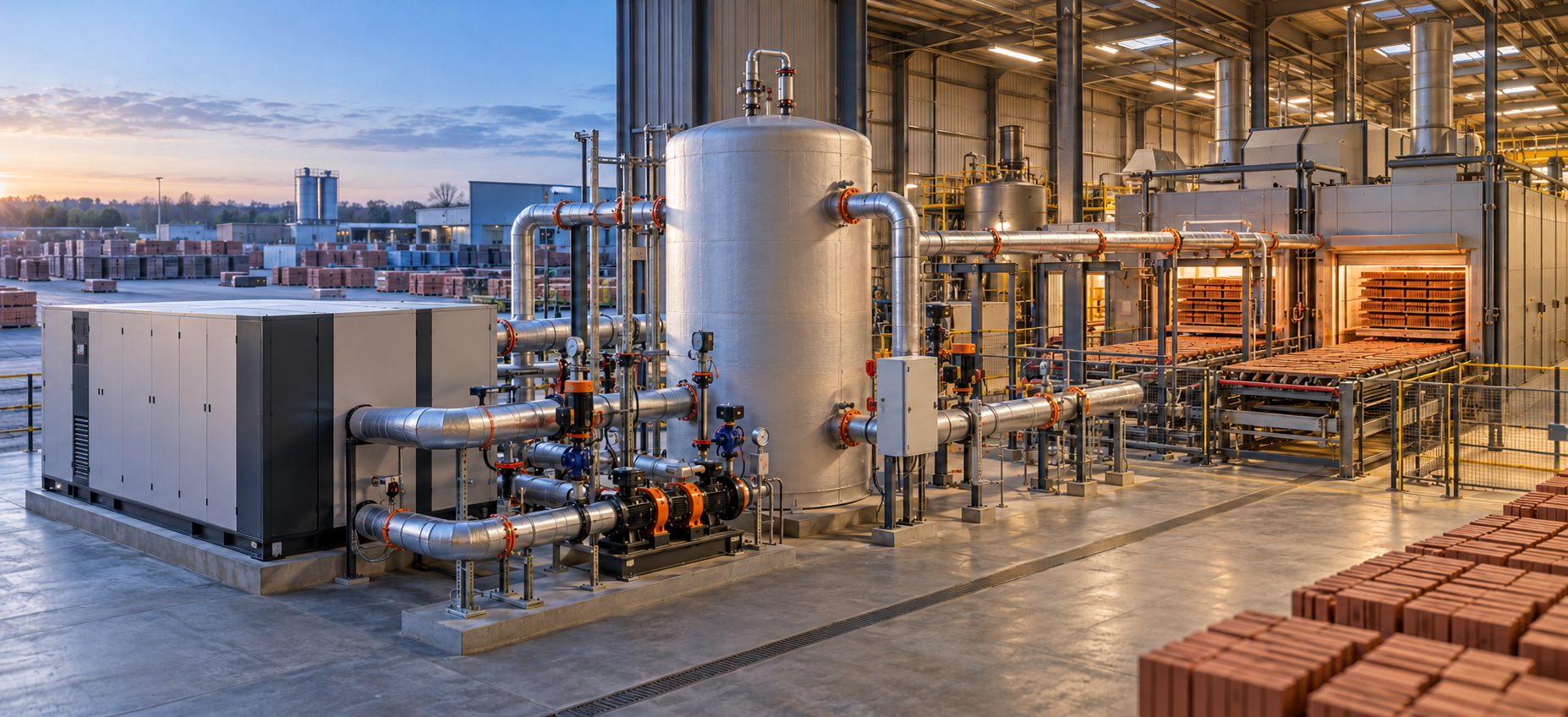
How Thermal Storage Lets Industrial Heat Pumps Run When Electricity Costs Less
Electrifying process heat changes what a factory buys. Instead of gas or oil, the site is now buying electricity, and the price of electricity changes throughout the day. Wholesale prices rise and fall with demand and with how much wind and solar generation is on the system. Network charges are often highest in the late-afternoon...
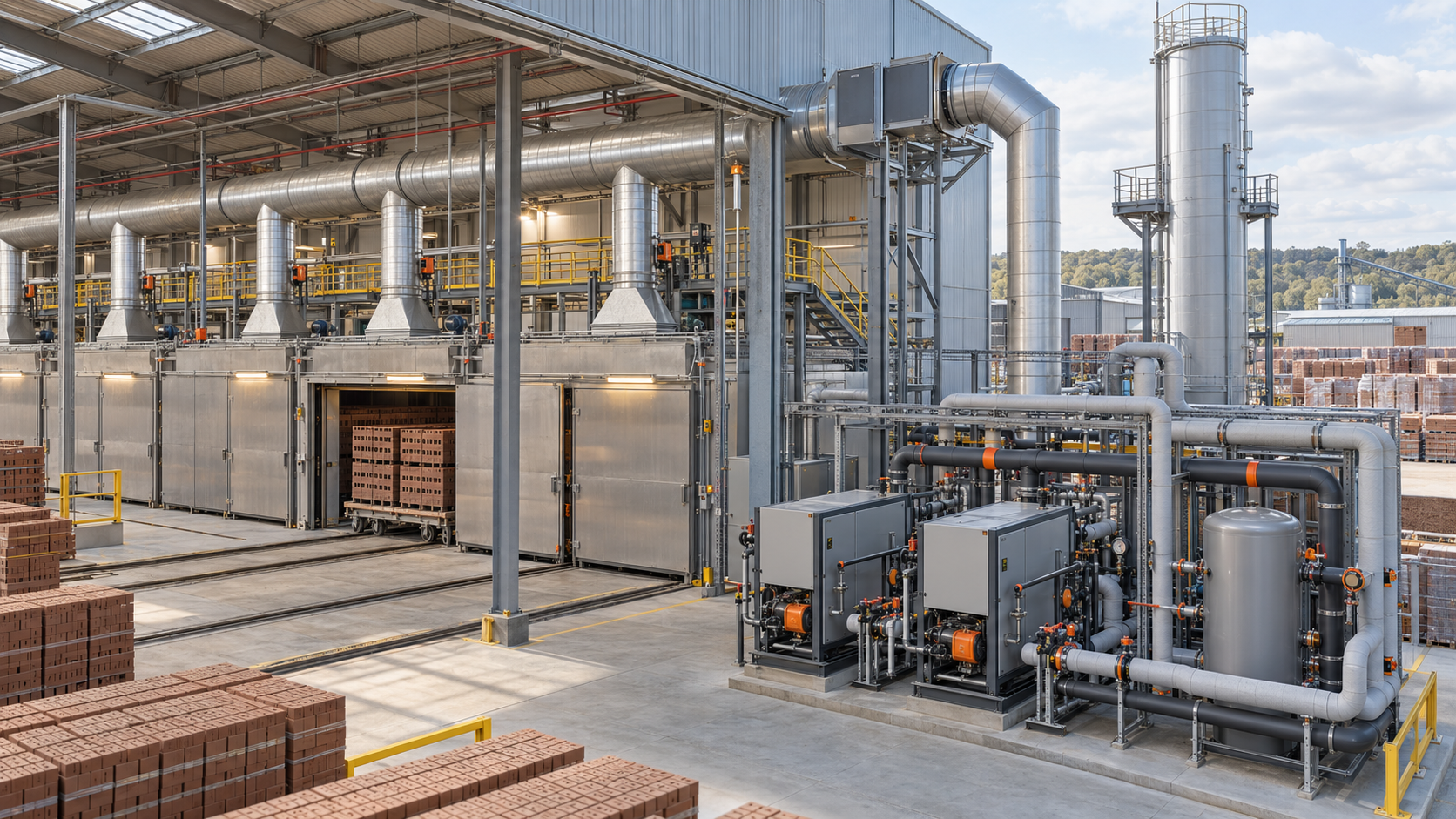
Why Process Integration Matters More Than Equipment Selection
When manufacturers begin exploring waste heat recovery or industrial heat pumps, the conversation often moves quickly towards equipment. Which heat pump should we use? What temperature can it deliver? How large should the heat exchanger be? What efficiency can the supplier guarantee? These are important...

How to Retrofit Heat Recovery into a Live Manufacturing Site
Retrofitting heat recovery into an operating factory is very different from designing it into a new facility. The available space is already occupied. Production schedules cannot simply be paused. Existing equipment may have been modified several times, and drawings do not always reflect what is currently installed. Any new system...

Decarbonising Ceramics: What The Industry Is Really Saying
Spend enough time talking to people across UK manufacturing and you'll notice that the conversation around industrial decarbonisation isn't quite what many people think it is. From the outside looking in, it's easy to assume that industry is dragging its feet. New technologies are being developed all the time, net zero targets are...

Waste Heat Recovery: The Lowest-Risk Route to Industrial Decarbonisation
Ask most people working in industrial energy about decarbonisation and the conversation usually goes one of two ways. Either it heads straight to hydrogen, which is promising but largely dependent on infrastructure that doesn't exist yet at scale. Or it goes to full electrification,...

The Biggest Barrier to Industrial Decarbonisation Isn't Technology
There's a common assumption in industrial circles that manufacturers are slow to decarbonise because the technology isn't ready yet. That somewhere down the line, a breakthrough will arrive and make the switch from gas easy. It's a comforting idea, because it puts the problem outside anyone's...

The 2040 Challenge: Why Industrial Heat Decarbonisation Projects Need to Start Today
The UK's industrial sector is entering a decisive decade. According to the Climate Change Committee, non-residential building emissions will need to fall by 87% by 2040. For manufacturers operating energy-intensive processes, this represents one of the most significant operational transitions since the widespread adoption of...

Industrial Decarbonisation: The Gas Era is Gradually winding down. Is Your Manufacturing Process Ready?
For decades, industrial manufacturing relied on a simple calculation: cheap natural gas made operational decisions easy. Energy-intensive plants ran fossil-fuel-powered equipment around the clock because the financial alternative simply did not exist. Today, that calculation has permanently changed. Between severe...

Heatcatcher commissions UK’s first waste heat to high temperature heat pump system for Brick Dryers at wienerberger Warnham works.
Nov 25. UK’s first waste heat to high temperature heat pump system for Brick Dryers Heatcatcher were the Principal Designers and Contractors managing the project delivery of the waste heat and water recovery system from the 7 chamber stacks to the heat pumps and the heat delivery network into the 7 drying chambers at the wienerberger...

Waste Heat Source Heat Pumps – Increasing return on investments
September 2024: Identifying a waste heat source as an alternative to an air source or a ground source, significantly increases the systems Co-efficiency of Performance COP, a lower electricity input for the heating demand. Waste heat - water source high temperature heat pump, picture courtesy Enerblue srl. When...

Palladium Heat Pump launch at Greenpeace UK
September 2024 Thank you to our Heat Pump technology partner Pure Thermal for the invite to the UK launch of the Enerblue Palladium Air Source Heat Pump at the Greenpeace UK Headquarters. Pure Thermal has provided the latest ultra-low noise Hydrocarbon Heat Pump to Greenpeace UK to provide a low carbon retrofit heating solution...

Delivering Net Zero - UK Ceramics Event 17th September 24
Heatcatcher are proud to be supporting the Delivering Net Zero Ceramics UK event again this year with the CEO Darren Bryant, offering his insights on “Bridging the Technology Gap” to achieve Net Zero. The Ceramics UK Industry Decarbonisation Roadmap perceives how the range of companies in the sector will need to...

Phase 3 of the Industrial Energy Transformation Fund – Open for Applications
On 29th January 24 Phase 3 of the UK’s Governments DESNZ for the Industrial Energy Transformation Fund opens for applications, with up to £500 million to invest by 2028. This funding will be allocated through 3 consecutive application windows. This first application window is open until 20th April 24 providing grants...

Darren Bryant - CEO of Heatcatcher presenting the 2023 Net Zero Carbon Advocate Award to Darren Bowkett
September 2024: Darren Bryant - CEO of Heatcatcher presenting the 2023 Net Zero Carbon Advocate Award to Darren Bowkett - Technical and Strategic Projects Director at Ibstock PLC, alongside Lee Brownsword Senior Manager - Industrial & Environmental Policy at the British Ceramic Confederation. “ It was a great honour yesterday...

Net Zero Business Advocate award
September 2023: Heatcatcher are proud to sponsor and present “Net Zero Business Advocate award” at the Delivering Net Zero for British Ceramics 2023 Conference - Weds 13th Sept, Staffs University, Stoke-on-Trent. The annual event showcases decarbonisation of the UK ceramics industry, along with the associated...

Heat Pump Technology - Temperatures Rising for Industrial Applications
September 2023: The market forces for Energy Intensive Industries to decarbonise their processes towards net zero are intensifying. Processes requiring hot water or low pressure steam are switching away from fossil fuelled gas boilers to high temperature heat pumps powered by zero carbon electricity. The manufacturers...
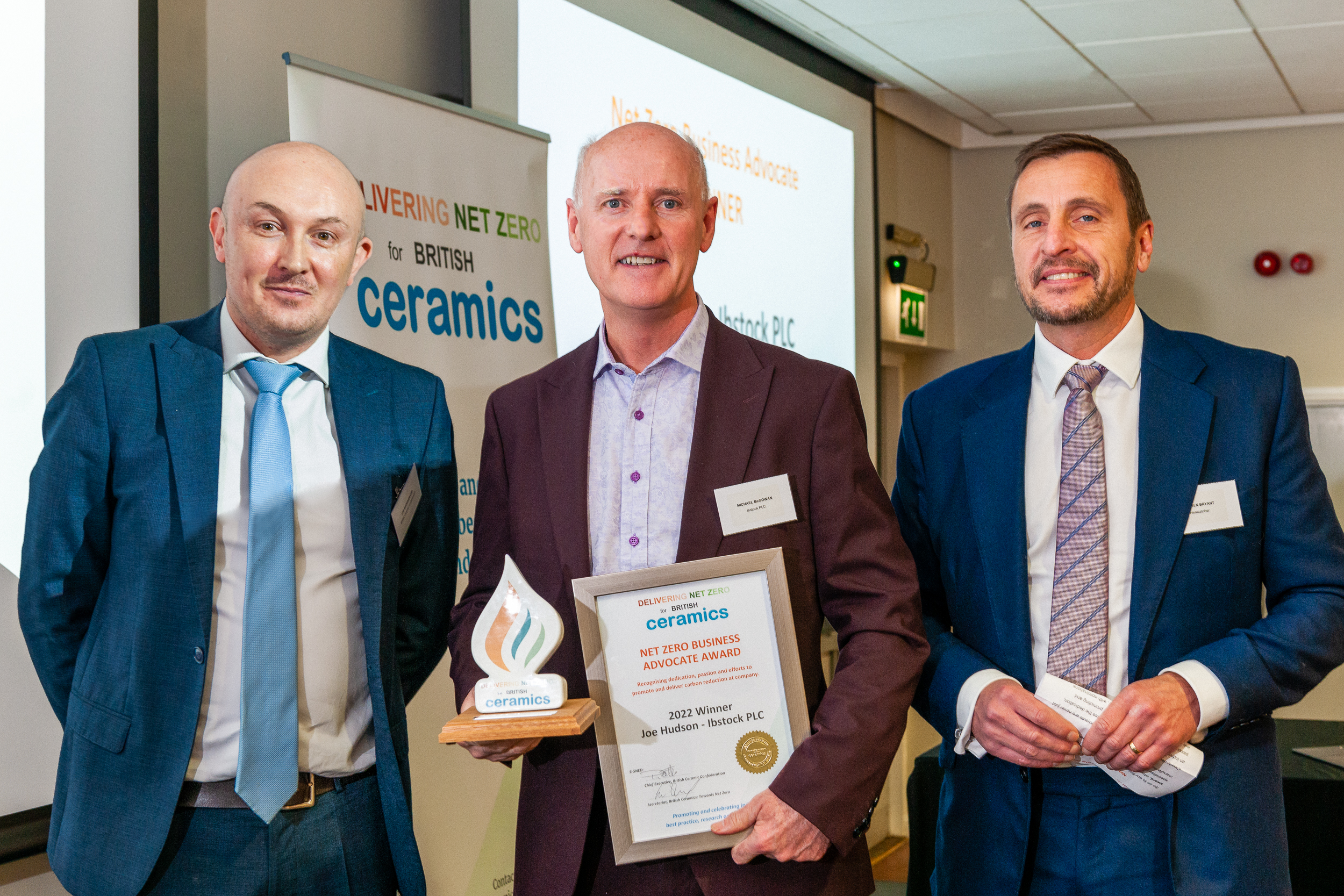
BCC Net Zero advocate award
One of the judges presenting last weeks BCC Net Zero advocate award, collected by Michael McGowan on behalf of Ibstock PLC’s CEO Joe Hudson. “Congratulations Joe on your vision for a sustainable, decarbonised future and how you are inspiring employees to be part of the company’s success” ...

The Importance of Net Zero Businesses in the Ceramics Sector
The Importance of Net Zero Businesses in the Ceramics Sector The UK Ceramics industry is a diverse carbon intensive sector supplying the Construction Industry directly with brick, tiles, blocks, clay pipes and indirectly supplying the glass, steel and cement industries with high temperature refractory linings, and advanced ceramic...
Final Phase of Heat Decarbonisation IETF Competition
The final phase of the UK Governments £289m Industrial Energy Transformation Fund opens on 10th October and closes on 13th January 23. The grants fund energy efficiency and decarbonisation feasibility studies, engineering studies and project deployment, with grants from 30% to 65%, dependent on company size and manufacturing...

New Phase of IETF – Opens to Mining, Quarrying and Materials Recycling and Recovery
11th January 22 – The next 60m phase of the UK Governments Industrial Energy Transformation Fund opens for applications from 31st January until 29th April 22. The new phase in addition to Manufacturing and Data Centres is now open to the energy intensive sectors of Quarrying & Mining and the Recovery and Recycling of Materials....

Transforming the Foundation Industries
Energy Efficiency (process efficiency, heat recovery) Capturing waste heat from energy intensive processes can reduce energy costs by using the heat in other processes or by generating electrical power. Although the technology and principles are well understood, it is often seen as impractical or not cost effective. Presentations...
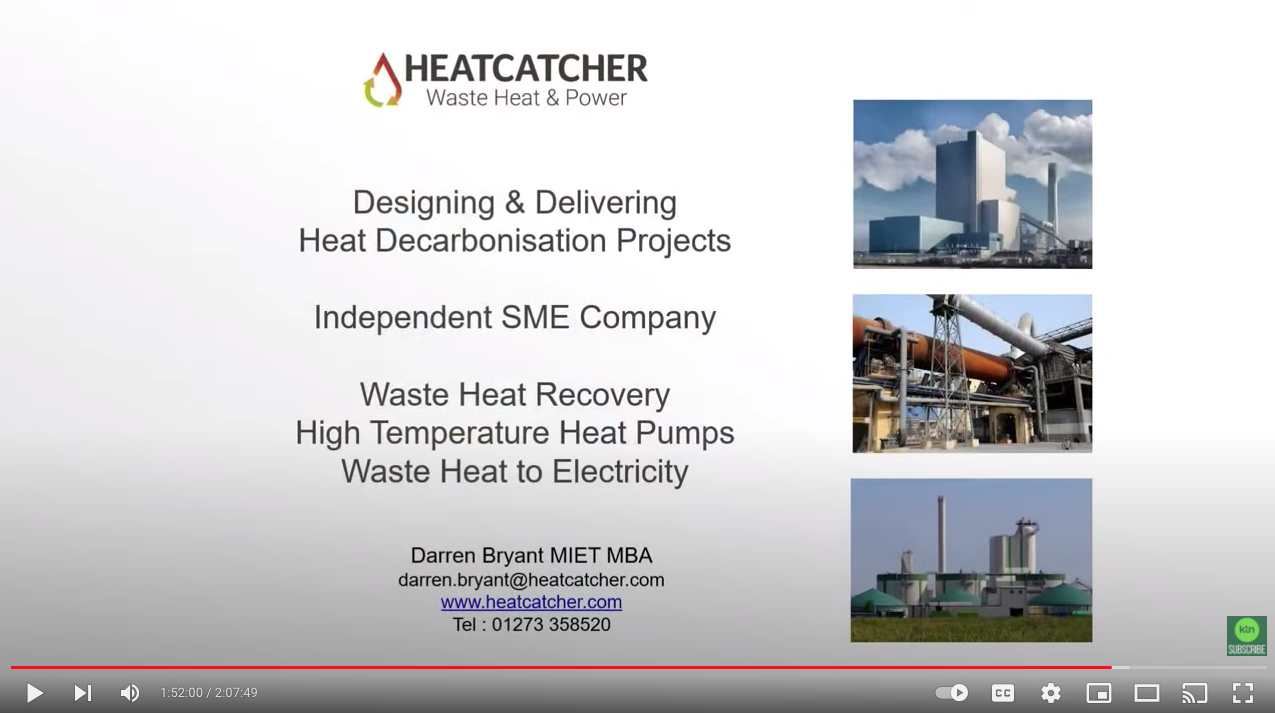
Pitching at the IETF Competition Briefing - 06/10/21
Pitching our Deep Decarbonisation Project Idea to a powerful audience at the Phase 2 Industrial Energy Transformation Fund Competition Briefing, a big thank you to Jenni McDonnell and the Knowledge Transfer Network - Energy Team Energy - KTN (ktn-uk.org), for the opportunity to contribute. ...

IETF Phase 2 Deep Decarbonisation Project Funding - Opens 27th September 21
22nd September 21 – The second £60m phase of the UK Governments £315m Industrial Energy Transformation Fund opens for applications from 27th September 21. New to phase 2 is the support of Deep Decarbonisation projects in addition to Energy Efficiency, feasibility and engineering studies, with grants from 30% to...

Focus on Heat Decarbonisation – Phase 3 Public Sector Decarbonisation Scheme - 19/9/2021
BEIS announces priority for Phase 3 Public Sector Decarbonisation Scheme to provide funding for heat decarbonisation projects, where fossil fuelled heating systems are at the end of their working lives and in need of replacement. The competition opens on 6th October 21, funding Public Sector projects planning to switch boilers to...

Heat Decarbonisation Road Map Support - 1/9/2021
Decarbonisation is the priority for publicly traded manufacturing companies to attract investment from ESG (Environmental, Social Governance) Funds. Supplying heat to the manufacturing process has the largest carbon emission impact with the greatest technical and economic challenge to decarbonise. How and when to switch industrial...

Industrial Energy Transformation Fund Competition Briefing - 15/03/21
Proud to be presenting to a powerful audience for the Industrial Energy Transformation Fund Competition Briefing, a big thank you to Jenni McDonnell and the Knowledge Transfer Network - Energy Team Energy - KTN (ktn-uk.org), for asking me to contribute ...

Heat Decarbonisation - IETF Open for Applications - 8/03/21
8th March 21 – The Industrial Energy Transformation Fund applications open, until 14th July 21 Heatcatcher will be presenting a range of energy transformation technologies at the competition briefing webinar on Thursday 11 March, to register visit: https://web-eur.cvent.com/event/729141a4-ed9c-4bcc-af8c-99cafe93f921/summary The...

Heat Decarbonisation - IETF Competition Round 2. Opens 8th March 2021.
The next £40m round of the UK Governments Industrial Energy Transformation Fund opens for applications on 8th March 21. The grants fund energy efficiency and decarbonisation feasibility studies, engineering studies and project deployment, with grants from 30% to 65%, dependent on company size and manufacturing plant location. Competition...

Decarbonising Industry - Industrial Energy Transformation Fund - Opens 20th July 20
The first £30m phase of the UK Governments £315m Industrial Energy Transformation Fund opens for applications from 20th July 20. The scheme is designed to support the investment in large scale decarbonisation projects, feasibility and engineering studies, with grants from 30% to 65%, dependent on company size and plant...

BEIS Release application details for long awaited Industrial Heat Recovery £18m fund.
Business Energy and Industrial Strategy Department releases the long-awaited application details for the Industrial Heat Support (IHRS) programme. A pot of £18m of grant funding available to support the uptake of industrial heat recovery projects. From Concept through to Delivery, this grant funding is for feasibility studies,...

What is the (BEIS) Industrial Heat Support Programme and what is it for?
What is the (BEIS) Industrial Heat Support Programme and what is it for? The Government’s Modern Industrial Strategy At the start of this year, the Government released a Green Paper outlining their vision for post-Brexit industry within the UK, cementing the need for a Modern Industrial Strategy to improve the country’s...

Organic Rankine Cycle Needs to Piggyback on CHP Market Success
Darren Bryant CEO of Heatcatcher comments ORC needs to piggyback on the success of the CHP market. Over 2000 UK businesses have installed combined heat and power (CHP) systems with a total generating electrical generating capacity of 5.5 GW according to the Association of Decentralised Energy. The worldwide market for CHP gas engines...

Organic Rankine Cycle Energy Efficiency Improvement for AD Plants
Energy efficiency improvement measures are a condition of Environmental Permits issued to Anaerobic Digestion plant operators. Organic Rankine Cycle generators recovering the high temperature exhaust gas from the Biogas electricity generators has proven a commercially viable energy efficiency improvement for several AD plants in...

Choosing the best techniques for waste heat recovery
Darren Bryant, CEO of Heatcatcher UK, discusses best available waste heat recovery techniques for the glass industry and outlines UK government initiatives to help manufacturers with funding. Heatcatcher started designing, building and operating Waste Heat Recovery (WHR) systems in the lime and cement industry, commissioning...

How Government can support businesses to realise savings through greater energy efficiency?
Building our Industrial Strategy BEIS green paper asks, how Government can support businesses to realise savings through greater energy efficiency? Last week the UK Government published its green paper setting out its proposal to build a modern industrial strategy. Focussed on 10 pillars of strategy, the 7th pillar delivering...

Government to support heat recovery from British Glass Industry
BEIS the department for Business Energy and Industrial Strategy is expected to launch later this year the first phase of the Industrial Heat Support Programme, offering up to 40% funding support for studies assessing the technical and economic feasibility of recovering and reusing heat from the exhausts of glass furnaces. The second...

Optimising exhaust gas Waste Heat Recovery with computational fluid dynamic modelling
Organic Rankine Cycle (ORC) technology is proven in the field of waste heat recovery (WHR). Its ability to recover low grade heat from combustion flue gas, kiln and furnace exhausts makes it an ideal technology choice for WHR from industry. However recovering the waste heat from industrial process comes with a number of technical...

Electricity from 80°C hot water
Converting hot water above 80°C into electricity is now a commercial reality following the recent developments in smaller scale low temperature Organic Rankine Cycle (ORC) technology. The reduction in ORC unit and integration costs of plug and play containerised solutions from 10kWe to 100 kWe now makes additional carbon free...

ORC Generators - Synchronous or Asynchronous?
The Organic Rankine Cycle (ORC) expander converts the recovered thermal energy from a low grade waste heat source into kinetic energy, which is then converted into electrical energy by a generator. There are many different combinations of expander technologies and working fluids used in ORC technology to achieve this, this article...

Optimising WHR systems with direct heat exchange
The worlds electrical consumption is rising, with up to 40% of the fossil fuel energy lost as waste heat in the exhaust gas [1], by using Waste Heat recovery (WHR) technologies there is an abundance of thermal energy for conversion to low carbon electricity. Following the recent Paris COP21 climate change agreement, industry will...

A Guide to working fluid selection for Organic Rankine Cycle ORC generators
In the face of growing need to reduce carbon emissions from fossil fuel the demand for alternative renewable and low carbon sources of electricity generation is always increasing. Advanced technologies for the conversion of low grade heat sources into power like Organic Rankine Cycle (ORC) generators have been proven and successfully...

Waste Heat Recovery 100,000 Tonnes of Decarbonisation for the UK Cement Industry
Cement production can be divided into the two basic steps of clinker production and grinding. Clinker is made in a rotary kiln using fossil and non-fossil fuels to heat raw materials to 1,450°C, the clinker is cooled and then ground with other materials to produce cement powder. The combustion of the fossil fuels and indirect...

Heat Recovery Technologies – Economic support needed to decarbonise the UK Chemical Industry
The UK chemicals sector covers a diverse range of processes, from large volume complex processes producing basic chemicals to smaller batch processing for speciality chemicals and pharmaceutical ingredients. The UK Governments Industrial Decarbonisation and Energy Efficiency Roadmap to 2050 for the Chemical Industry published in...

Waste Heat Recovery Innovation – how grant funds help
Following the UK government spending review and the pledge of innovation funding to develop low carbon technology and a focus on the re-use of industrial waste heat to help towards decarbonisation targets, the innovation work to improve the return on investment for WHR technologies such as Organic Rankine Cycle ORC generators continues....

Heatcatcher installs Heliex Power technology at Clinical Waste Incineration Site
Annual energy saving measures of 1,352 MWh, reducing 730 tonnes of Carbon Dioxide emissionsSeptember 2015: A new waste heat to power project completed in August, saw Heatcatcher Ltd, a technology integration company based at the Sussex Innovation Centre, chosen by Heliex Power Ltd, to integrate its innovative steam screw expander...
UK Government Tax Incentives for Waste Heat to Electricity technology
On 18th March 2015 the UK Government confirmed, in the Budget 2015, that a number of changes to the (ECA) Enhanced Capital Allowance Scheme for energy saving technologies would come into effect in the Summer. These changes included the adding of the new “Waste heat to electricity conversion equipment Technology Sector”...
Darren Bryant CEO presents at Global CemPower 2015
The 3rd Global CemPower Conference on electricity issues in the global cement industry has successfully taken place in London on 1-2 June, with delegates from 18 countries and representatives of over half a billion tonnes of cement production capacity in attendance.The Global CemPower Conference is unique in cement industry meetings...

Heatcatcher shortlisted for IMA Europe 2014 Recognition Award for Innovation
Heatcatcher’s ORC project at Thrislington was a runner up at the Industrial Minerals Association Europe awards dinner on the occasion of the IMA-Europe 20th Anniversary celebrations in Brussels on 23rd September 2014. The IMA-Europe Recognition Award was created in 2006 to acknowledge external bodies for their contribution...

UK’s First Waste Heat To Power System Completed at Thrislington Plant
Heatcatcher Ltd completes waste heat to power system for Steetley Dolomite Brighton based company delivers on £1.3million generator contract New system results in 25% improvement in electrical efficiency Annual Energy saving measures of 3,000 MWh – equivalent to the energy required by 150 homes CO2 output reduced...